
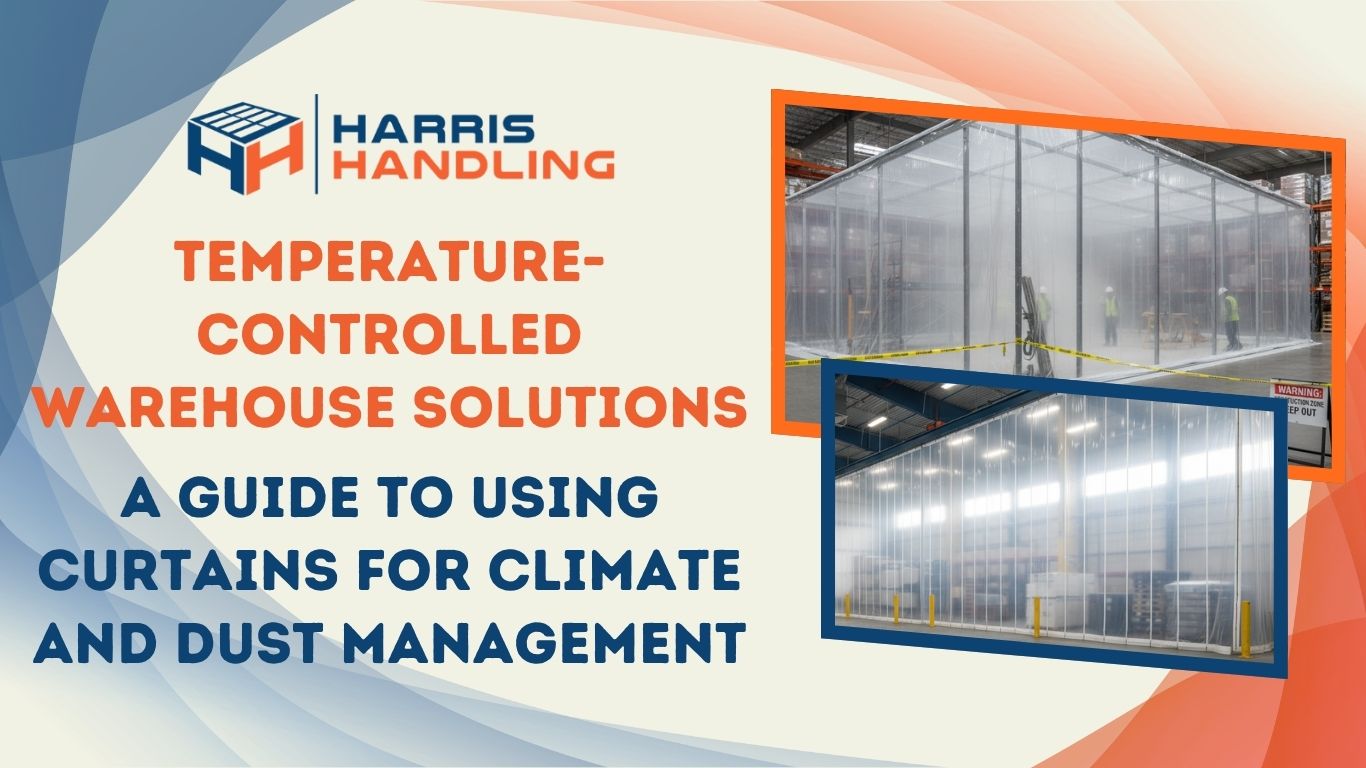
Warehouses across Charlotte, Raleigh, and surrounding North Carolina areas face one major challenge: keeping temperatures stable while controlling dust and airflow. Inconsistent indoor temperatures and dust buildup can quietly drive up energy costs and damage valuable inventory. Many facility managers rely on HVAC systems alone, unaware that most energy escapes through open zones, loading docks, or poorly divided workspaces. Without proper separation, conditioned air mixes with outdoor humidity and airborne particles, creating uneven zones that make employees uncomfortable and reduce efficiency. Over time, this leads to higher utility bills, increased wear on equipment, and potential product spoilage.
That’s where temperature-controlled warehouse solutions come in. By using flexible, insulated, or PVC curtain systems, businesses can create controlled environments within existing layouts, without costly construction. These industrial curtain systems help regulate temperature, improve air quality, and boost energy efficiency, all while maintaining flexibility for workflow and equipment movement.
Table of Contents
- Creating the Right Climate Inside Every Warehouse Zone
- How Industrial Curtains Keep Dust, Debris, and Airflow in Check
- Picking the Right Curtain Setup for Your Warehouse Needs
- Keeping Curtains Efficient, Clean, and Long-Lasting
- Future-Ready Curtain Systems for Smarter Warehouses
- Building a Smarter, Cleaner, and More Efficient Warehouse
- Quick FAQs About Temperature-Controlled Warehouse Solutions
Creating the Right Climate Inside Every Warehouse Zone
Maintaining consistent temperatures is about protecting your products, equipment, and workforce. Many warehouses in North Carolina struggle with fluctuating conditions caused by open dock doors, large storage areas, and inadequate airflow control. When hot and cold zones clash, condensation, product spoilage, and equipment malfunctions often follow. The right curtain-based temperature-controlled warehouse solutions help stabilize indoor climates, saving thousands in energy costs while improving overall working conditions.
Beyond temperature, proper warehouse climate control supports compliance with storage regulations and enhances safety. It reduces strain on HVAC systems by keeping conditioned air where it’s needed most — in refrigerated, assembly, or packaging areas. Curtains act as an energy barrier that traps cool or warm air, allowing warehouse managers to maintain separate environmental zones with minimal effort. The result? Lower energy bills, happier employees, and improved operational flow.
RELATED: Warehouse Safety Equipment: Why It Is Crucial for Your Facility
How Temperature Impacts Product Quality and Worker Efficiency
Temperature swings directly affect product integrity and staff performance. Excessive heat can melt packaging, spoil perishable goods, and alter the composition of sensitive materials. Likewise, cold spots may slow production or make working conditions unpleasant for employees. Stable indoor climates keep everything running smoothly, reducing downtime and product waste while ensuring workers stay productive throughout the day. A well-controlled environment supports consistency. When materials and products are stored at the right temperature, you prevent warping, corrosion, and other defects that can lead to costly replacements.
Hidden Energy Drains in Poorly Sealed Warehouses
Even with strong HVAC systems, energy loss happens fast when air leaks through open or unzoned spaces. Doors, dock areas, and unpartitioned work zones allow cooled or heated air to escape, forcing your system to work harder and consume more electricity. Over time, this strain shortens the lifespan of HVAC units and increases maintenance costs. By installing insulated or flexible curtain walls, you create containment zones that dramatically reduce temperature fluctuations. These barriers can stop energy leaks and maintain consistent airflow patterns..
Curtain Barriers That Keep the Temperature Steady
Curtain barriers are among the most efficient industrial curtain systems available for warehouses. Made from durable PVC or insulated vinyl, they create flexible enclosures that block heat transfer while allowing easy movement between zones. Instead of building permanent walls, you can reconfigure layouts anytime, which is perfect for growing businesses that need adaptive climate control. These systems also integrate seamlessly with doors, conveyors, or cold-storage areas. The barrier acts as a seal between conditioned and unconditioned air, helping maintain target temperatures year-round.
How Industrial Curtains Keep Dust, Debris, and Airflow in Check
Controlling dust inside a warehouse can be just as challenging as managing temperature. From packaging lines to loading docks, every open space is a gateway for airborne particles. Over time, that dust can settle on equipment, clog filters, and contaminate stored goods. Many North Carolina facilities deal with constant cleaning cycles and rising maintenance costs because of it. Installing industrial curtain systems is one of the simplest and most effective ways to reduce airborne contamination while keeping workflow uninterrupted.
These flexible barriers act like invisible shields that stop debris and dust from traveling between zones without the need for solid walls. In North Carolina warehouses, this matters most where manufacturing and storage areas meet. Curtains allow forklifts, pallets, and staff to move freely while still protecting sensitive products from dust exposure. With proper design and placement, curtain systems can improve indoor air quality and create a cleaner, safer work environment for everyone.
Choosing Curtain Types That Match Your Environment
Every warehouse has different needs, and the right curtain type depends on your operations.Each energy-efficient partitions can be customized for thickness, overlap, and mobility. For warehouses across Charlotte and nearby industrial zones, mixing curtain types ensures both airflow and cleanliness are properly balanced.
- PVC Strip Curtains are ideal for high-traffic areas such as loading bays. They provide clear visibility and allow easy access for people and equipment.
- Insulated Curtains work best in temperature-controlled zones where thermal protection is a must, helping keep cool or warm air contained.
- Mesh Curtains allow ventilation while blocking larger dust particles — perfect for separating production from packing areas.
Keeping Dust Out Without Stopping the Workflow
Dust control shouldn’t mean slowing down operations. Traditional walls or doors can restrict movement and reduce efficiency, but curtain barriers maintain accessibility. Workers and machinery can move quickly through flexible openings, while air pressure and particle flow remain contained. These dust containment solutions also minimize the need for constant cleaning or air filter replacements. By dividing dusty workstations from clean zones, managers can extend the life of HVAC systems and reduce overall maintenance costs. It’s a proactive approach that keeps productivity high and downtime low — essential for busy distribution centers and manufacturing plants in the Carolinas.
Dividing Workspaces for Cleaner, Safer Operations
A well-planned temperature-controlled warehouse solution can effectively manage both dust and climate without disrupting daily operations. Harris Handling’s curtain systems allow warehouses to section off specific work zones, keeping sensitive equipment protected while maintaining smooth, efficient workflows.
These solutions separate clean and production areas and help preserve air quality by preventing cross-contamination. At the same time, dust-tight barriers regulate temperatures more evenly across different sections, ensuring comfort and consistency. With less airborne debris settling on surfaces and equipment, maintenance needs and cleaning downtime are significantly reduced.
RELATED: Warehouse Expansion: How to Plan with Minimal Disruption – Harris Handling
Picking the Right Curtain Setup for Your Warehouse Needs
The layout, materials stored, and temperature requirements of a warehouse all affect the ideal setup. Many managers in North Carolina start with a one-size-fits-all approach, only to realize that airflow, lighting, and mobility vary drastically across zones. Choosing the right curtain system should be about blocking air and balancing insulation, durability, and flexibility. The wrong setup could limit productivity or lead to unnecessary energy loss.
That’s why Harris Handling custom-designs every curtain layout to match the facility’s workflow. From partitioning cold-storage rooms to enclosing assembly lines, each system is tailored to optimize warehouse climate control and dust reduction. The right configuration keeps conditioned air contained, allows traffic flow, and ensures compliance with local building and safety standards. Whether your operation runs forklifts or conveyor systems, the goal is always the same — efficiency, safety, and savings.
RELATED: Barrier Netting Systems: Ultimate Guide to Enhancing Safety in Warehouses
What to Check Before Installing Industrial Curtains
Proper planning prevents common issues like air leaks or misaligned panels. For temperature-controlled warehouse solutions, even small adjustments, such as curtain overlap or mounting height, can significantly improve insulation and airflow balance. Before installing any curtain system, take time to assess your space. Consider:
- Traffic flow — How often will employees or forklifts pass through the barrier?
- Temperature range — Are you maintaining chilled zones or simply minimizing heat transfer?
- Mobility needs — Should the curtains be stationary or sliding for easy access?
- Material durability — Choose heavy-duty vinyl or PVC for high-impact areas.
Matching Curtain Systems to Different Industries
Different industries face unique climate and contamination challenges, which makes a tailored curtain solution essential. In cold storage and food facilities, insulated and anti-microbial curtains maintain strict temperature control while meeting hygiene standards. Manufacturing environments benefit from barriers that minimize dust and noise, creating safer and more efficient work zones. For logistics and distribution centers, clear flexible partitions support visibility and quick movement without sacrificing protection. Together, these specialized designs enhance cleanliness, comfort, and compliance with OSHA and environmental standards. Across North Carolina’s growing industrial hubs, Harris Handling’s curtain systems continue to deliver long-lasting performance and adaptability as operational needs evolve.
RELATED: Dust Containment Curtains: Durable & Custom Solutions
Why Professional Installation Pays Off
Many warehouse managers try to install curtains in-house to cut costs, but professional installation saves time, prevents errors, and guarantees safety compliance. Expert technicians ensure proper alignment, overlap, and sealing, eliminating gaps where air or dust could escape. They also verify that the mounting hardware can handle the curtain’s weight and daily traffic.
With Harris Handling’s trained team, you gain peace of mind knowing your curtain system meets both performance and safety standards. Plus, a properly installed setup lasts longer and reduces the need for frequent replacements, maximizing the return on investment for your industrial curtain systems.
Keeping Curtains Efficient, Clean, and Long-Lasting
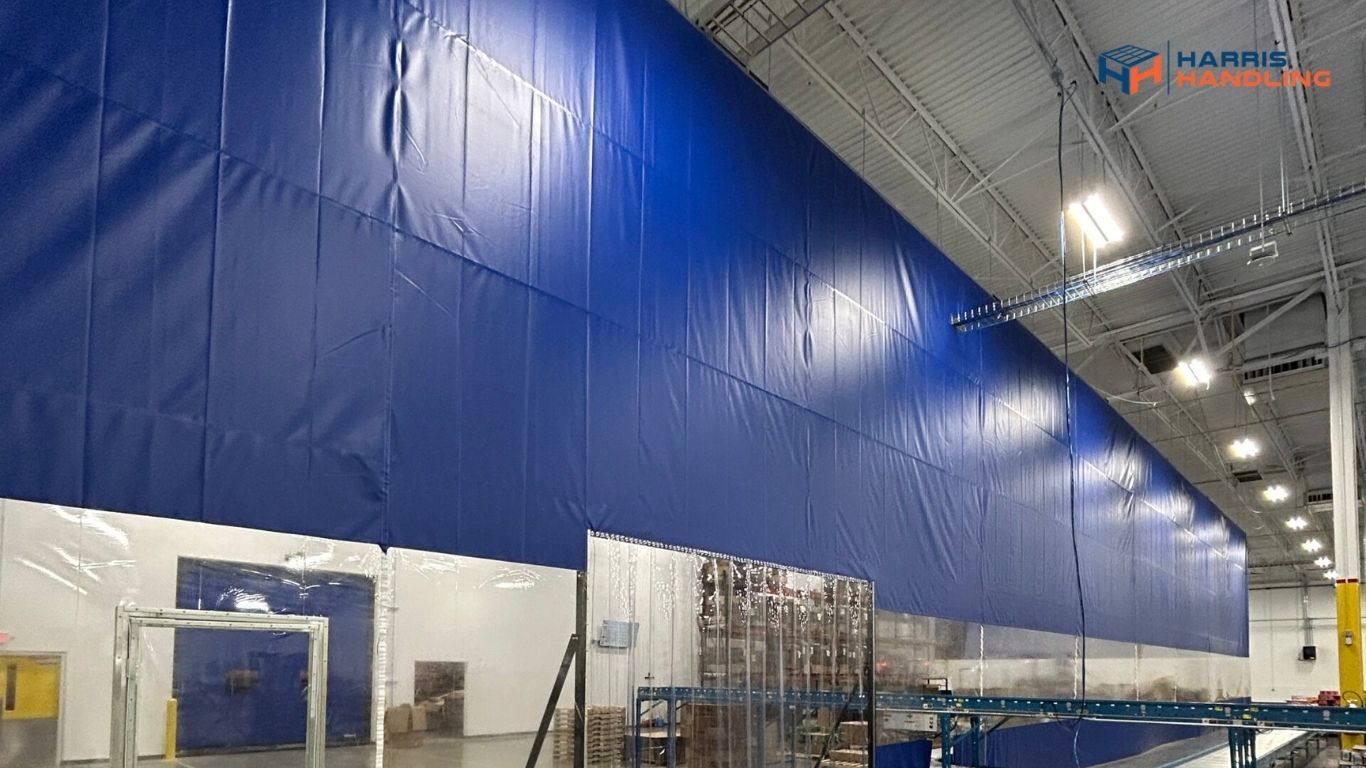
Once your curtain system is in place, keeping it in top shape is key to maintaining energy efficiency and safety. Over time, dust, forklift traffic, and temperature shifts can wear down materials or loosen seals. A neglected curtain loses its ability to block airflow and control dust, costing your warehouse more in energy and maintenance. By establishing a simple cleaning and inspection routine, managers can protect their investment and extend the lifespan of their temperature-controlled warehouse solutions.
In North Carolina’s mixed climate, regular upkeep helps prevent condensation, cracking, and material warping. At Harris Handling, we often see warehouses improve performance simply by tightening overlaps, replacing worn strips, and cleaning panels with mild detergent. These small actions make a big impact — improving insulation, airflow, and safety compliance — while reducing the need for premature replacements or repairs.
Maintenance Habits That Prevent Damage
Preventive maintenance starts with regular inspection. Curtains should be checked weekly for rips, stains, or loose fittings, especially in high-traffic loading docks. Dirt and debris can scratch clear PVC panels, reducing visibility and airflow efficiency. Cleaning with gentle, non-abrasive solutions maintains transparency and durability without compromising flexibility. Warehouse managers should also inspect curtain tracks and mounting hardware for rust or misalignment. Tightening bolts, lubricating rollers, and keeping rails clear of debris all contribute to smoother operation.
Improving Energy Efficiency With Smart Adjustments
Even minor adjustments can lead to major energy savings. Over time, curtain panels may shift or stretch, creating small gaps that allow conditioned air to escape. Sealing those openings and ensuring proper overlap helps retain temperature balance. Another useful technique is to add double-layered insulation in cold or freezer zones. This traps air more effectively and minimizes condensation buildup. Combined with routine monitoring, these adjustments turn curtain systems into energy-efficient partitions that directly reduce monthly utility bills and carbon footprint.
Extending Curtain Life Through Proper Care
A well-maintained curtain can last up to 10 years or more, depending on usage and environment. The key is consistent care, such as wiping down panels, checking tension, and replacing damaged sections before they spread. Avoid sharp impacts or dragging heavy loads across panels, as these can cause tears or deformations that compromise performance. For Harris Handling clients across North Carolina, we recommend setting a quarterly maintenance schedule to review all curtain zones. By documenting wear patterns, you can predict when replacements or reinforcements will be needed.
Future-Ready Curtain Systems for Smarter Warehouses
The warehousing industry is evolving fast, and climate-control solutions are no exception. Businesses are shifting toward technology-driven and sustainable systems that do more than just divide space. Modern temperature-controlled warehouse solutions now integrate with automation, sensors, and data tools that help track air quality, temperature fluctuations, and energy usage in real time. These innovations give managers complete visibility over warehouse performance, ensuring every degree and dollar are used wisely.
At Harris Handling, we’ve seen how combining intelligent monitoring with durable materials can revolutionize operations. Smart curtain systems adjust automatically based on temperature or motion, while sustainable fabrics reduce the environmental footprint. For companies aiming to stay ahead of energy-efficiency standards, future-ready curtain systems offer both performance and peace of mind, keeping facilities cleaner, greener, and more cost-effective.
Automated Curtains That React to Temperature Shifts
Automation has changed how warehouses maintain consistency. Advanced curtain systems can now open, close, or adjust overlap based on internal and external temperature readings. This means less manual control and more precision, especially in cold-storage or high-traffic zones. Sensors detect temperature variances and instantly activate curtain movement, keeping every section within its optimal range. Automatic adjustment also saves energy and reduces strain on HVAC systems. It eliminates human error, ensuring that sensitive goods like electronics or perishables stay protected around the clock.
Eco-Conscious Curtain Materials Making a Difference
Sustainability is becoming a major factor in warehouse design. New curtain technologies now use eco-friendly, recyclable materials that reduce waste and support green initiatives. These options include low-VOC vinyl and high-efficiency insulated fabrics that help regulate temperature while minimizing carbon emissions. In cities like Charlotte and Raleigh, where businesses are increasingly adopting energy-saving practices, switching to green materials demonstrates corporate responsibility and long-term cost savings. Not only do these materials perform better over time, but they also make your warehouse more compliant with modern sustainability standards.
Data-Driven Control With Warehouse Management Integration
Today’s curtain systems can connect directly with warehouse management and energy-tracking software. This integration allows operators to monitor curtain performance, temperature levels, and even maintenance schedules from a single dashboard. By using analytics, managers can quickly identify problem areas and optimize curtain positioning to achieve better air balance and lower power consumption. Real-time information turns curtain systems into part of a smarter, interconnected warehouse climate control strategy, delivering measurable results in productivity, safety, and savings.
Building a Smarter, Cleaner, and More Efficient Warehouse
Creating a safe and efficient work environment starts with control — control over temperature, airflow, and dust. With temperature-controlled warehouse solutions, warehouses across Charlotte, Raleigh, and nearby North Carolina areas can achieve consistent conditions that protect products, reduce maintenance, and keep operations running smoothly. These systems do more than maintain temperature. They help companies lower energy bills, extend the lifespan of equipment, and improve air quality for workers. For many facility managers, the balance of performance and practicality is what makes curtain-based warehouse climate control such a valuable upgrade.
At Harris Handling, we’ve seen firsthand how a well-planned curtain system can transform a warehouse into a cleaner, safer, and more cost-effective operation. With proper installation and maintenance, these energy-efficient partitions can deliver lasting value, protecting both your inventory and your bottom line.
Take control of your warehouse environment today.
If your facility struggles with rising energy costs, dust buildup, or inconsistent temperatures, now is the time to act. Harris Handling specializes in Temperature-Controlled Warehouse Solutions that combine performance, safety, and flexibility. Our experts design and install custom curtain systems for businesses across Charlotte, Raleigh, and nearby NC cities, helping you create a cleaner, more efficient workspace.
👉 Call us today at 704-661-3501 to speak with a warehouse solutions specialist or fill out our online form to request a free consultation and quote.
Experience the difference that smarter climate control can make for your operations.
Our Best Sellers:
Quick FAQs About Temperature-Controlled Warehouse Solutions
1. What are temperature-controlled warehouse solutions?
Temperature-controlled warehouse solutions are systems designed to maintain consistent indoor climates using insulated barriers, curtains, and HVAC zoning. They help prevent temperature swings, reduce energy loss, and protect products from damage — especially in warehouses across Charlotte and Raleigh with changing weather conditions.
2. How do industrial curtain systems help with dust control?
Industrial curtain systems act as flexible walls that block dust and debris from spreading between work areas. They allow easy movement for staff and equipment while keeping air cleaner and safer for storage, packaging, or production zones.
3. How often should warehouse curtains be cleaned or replaced?
Regular maintenance keeps curtains performing at their best. Clean panels monthly and inspect hardware every quarter. With proper care, temperature-controlled warehouse solutions can last 8–10 years or longer before needing replacement.
YOU’LL ALSO LIKE:
- Harris Handling’s Innovative Approach to VRC, Warehouse Mezzanines, and Racking Systems
- How to Improve Material Handling through VRC Freight Elevators?
- Warehouse Signage and Line Striping: Best Tips for Safety and Efficiency