
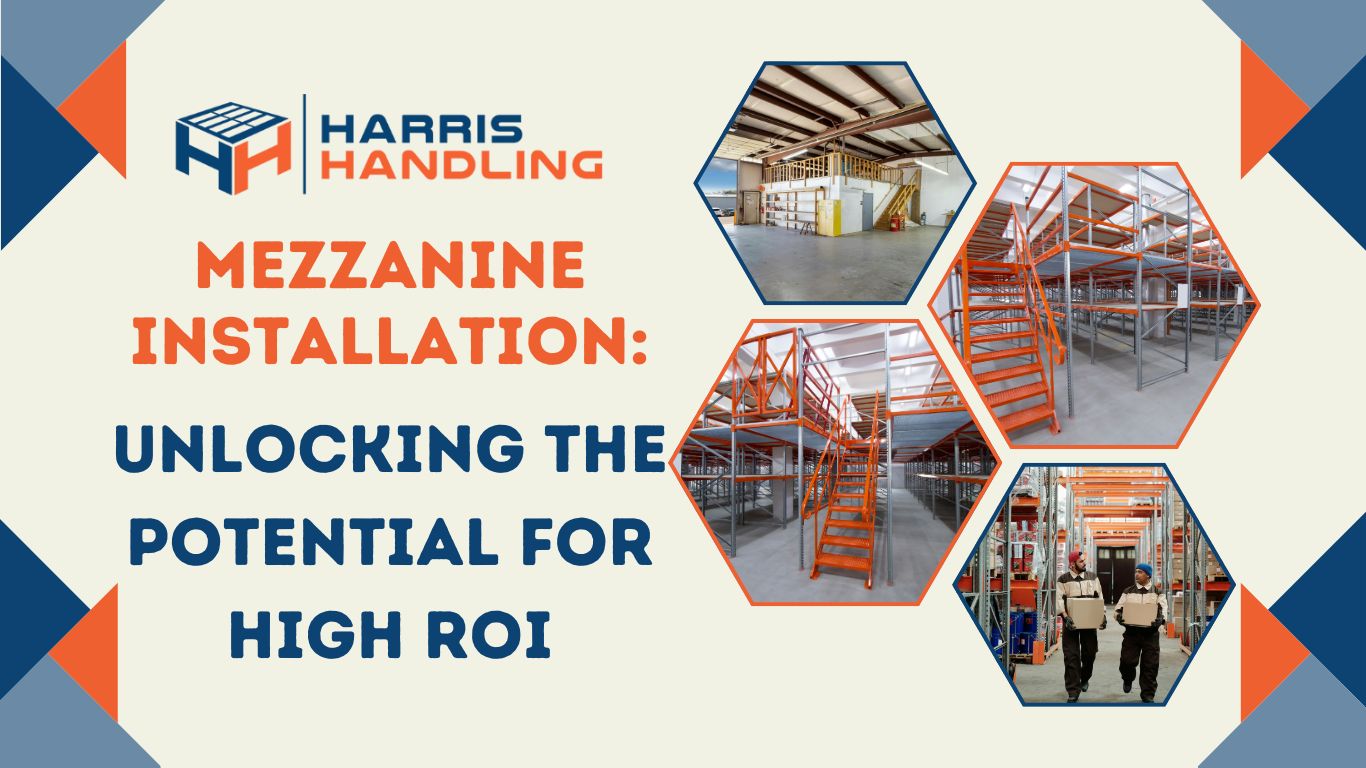
Running out of space is a problem that almost every warehouse or industrial facility faces sooner or later. Aisles get crowded, shelves fill up, and workflows start slowing down. At that point, most businesses consider either moving to a larger facility or building an extension—both options are costly, disruptive, and time-consuming. Without a smarter solution, growth stalls and productivity suffers.
Thankfully, there’s a better way. Mezzanine installation allows businesses to expand upward instead of outward, turning unused vertical space into valuable working areas. With this approach, you can create additional storage, office space, or even production zones without breaking the bank. Not only does it maximize your existing footprint, but it also delivers a high return on investment by lowering costs and boosting efficiency. In this guide, we’ll explore what mezzanines are, their benefits, real-world applications, and why Harris Handling is a trusted partner in delivering customized, high-quality solutions.
Table of Contents
- What Are Mezzanines and Why Do They Matter?
- Benefits of Mezzanine Installation
- Real-World Applications of Mezzanine Installation
- Harris Handling’s Expertise in Mezzanine Installation
- How to Get Started with a Mezzanine Installation
- The Choice is Clear: Mezzanines Are The Future of Warehouse Optimization
- Quick FAQs on ROI in Mezzanine Installation
What Are Mezzanines and Why Do They Matter?
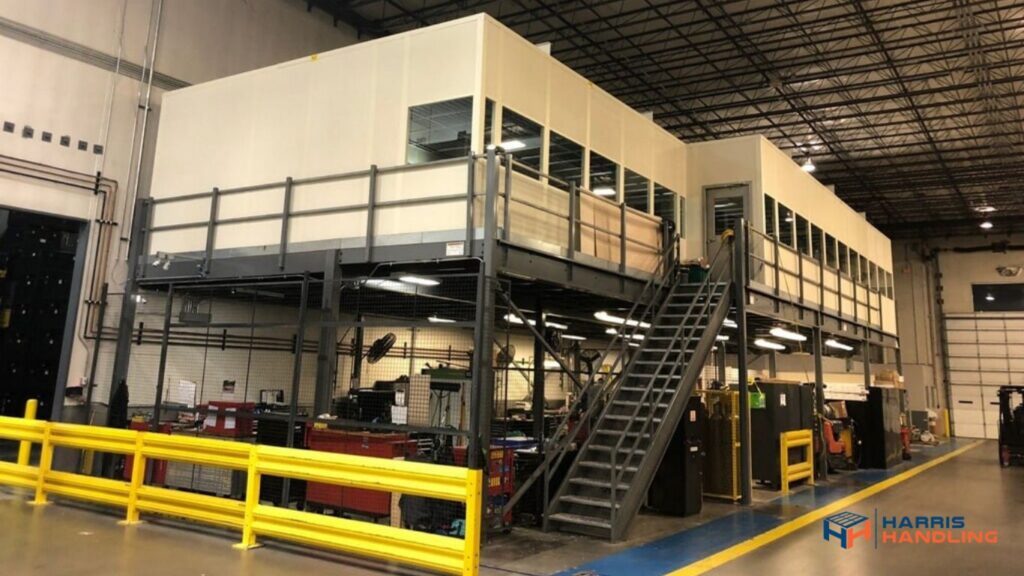
Mezzanines are intermediate platforms installed between the ground floor and ceiling of a warehouse or facility. Built from sturdy steel, they act as an extra floor within your existing space, designed to hold everything from office setups to palletized goods. Unlike permanent building expansions, mezzanines are semi-permanent structures that can be reconfigured, relocated, or even expanded as your business grows. They’re engineered to handle heavy loads while remaining cost-effective and practical.
What makes mezzanines so important is their ability to unlock unused cubic space. Many warehouses operate with plenty of overhead clearance but leave that space empty. By adding a mezzanine, you transform “dead air” into productive areas. This increases efficiency, lowers clutter, and allows for better organization of workflows. In short, mezzanines are the missing link for businesses that need more space but want to avoid the high costs of traditional construction.
How Mezzanines Transform Underutilized Space
Many warehouses have tall ceilings that leave a large portion of the building unused. A mezzanine changes that by converting “dead air” into practical working areas that add real value. This extra level can serve as a staging zone, storage floor, or even office space—without interfering with main floor operations. By transforming vertical clearance into functional space, businesses make smarter use of every square foot they already pay for. Over time, this space utilization improves workflow, reduces congestion, and delivers measurable gains in efficiency.
Why Mezzanines Matter for Businesses
For companies facing rapid growth, mezzanines offer a scalable solution that adapts to demand. They allow warehouses to separate functions—for example, keeping packaging above and raw storage below. This division streamlines tasks and helps workers operate more efficiently. Since they can be customized to your exact operations, mezzanines prevent bottlenecks that hurt productivity. More importantly, they allow businesses to stay competitive by expanding capacity without major expenses.
Different Types of Mezzanines
Mezzanines come in different designs to fit unique needs. Free-standing mezzanines are flexible structures that can be placed anywhere. Rack-supported mezzanines use existing racking for support, making them ideal for maximizing vertical storage. Shelving-supported mezzanines are perfect for lighter loads and smaller products. Each type offers distinct benefits, but they all share the same purpose—making the most of your space. Choosing the right one depends on your industry, budget, and long-term goals.
RELATED: Maximizing Space and Efficiency: Mezzanine Floor Designs for Warehouses
Benefits of Mezzanine Installation
The advantages of mezzanine systems go far beyond added storage. They transform operations by making existing space more functional. Instead of struggling with cramped floors, businesses can dedicate one level to picking and another to bulk storage. This division streamlines workflows and reduces congestion, making daily operations safer and more efficient.
Financially, mezzanines are a winning choice. Compared to moving to a new facility or constructing a building extension, mezzanines cost significantly less. They also offer quick installation times, meaning businesses see benefits almost immediately. This makes mezzanine projects one of the smartest investments for long-term growth and profitability.
Maximizing Vertical Space
Most warehouses have tall ceilings that leave plenty of unused overhead space. Mezzanines capture this wasted potential by adding new levels of usable area. This effectively doubles capacity without expanding the building footprint. By working vertically, businesses reduce clutter on the main floor and maintain clearer pathways, improving both safety and efficiency. Vertical expansion is not only smarter but also more affordable than traditional horizontal growth.
Cost-Effectiveness Compared to Expansion
Building outward often requires permits, land purchases, and expensive construction—all of which take time and money. In contrast, mezzanines are quick to install and far less costly. They deliver the same benefit of added space but without long construction timelines or operational shutdowns. Because they are modular, mezzanines also adapt to future growth, making them a smarter long-term investment.
- Lower Upfront Costs: Mezzanine installations require far less investment compared to new construction or large-scale facility remodels.
- Long-Term Savings: By avoiding the cost of leasing external storage or adding building square footage, businesses can see a faster return on investment (ROI).
- Efficient Use of Existing Space: Mezzanines allow businesses to grow their operations vertically, eliminating the cost burdens associated with land acquisition or building permits.
For companies facing space challenges, the ROI potential of mezzanines makes them an attractive alternative. By reducing reliance on external storage or delaying costly facility expansions, mezzanines help streamline budgeting while maximizing operational capacity.
Increased Efficiency and Flexibility
By separating operations across levels, mezzanines streamline workflows and reduce congestion on the main floor. For example, businesses can keep heavy bulk storage below and lighter packaging or assembly above. This division improves safety while cutting wasted steps. Since mezzanines are modular, they can also be expanded or relocated as needs change. That means businesses can scale quickly without being locked into rigid layouts, ensuring ongoing efficiency.
RELATED: The Advantages of Modular Warehouse Office in Charlotte NC
Real-World Applications of Mezzanine Installation
Mezzanine systems aren’t just theoretical—they’re already in use across industries worldwide. They provide practical solutions for warehouses, retail environments, factories, and even offices. Companies use them to add office space above production floors, create additional storage for seasonal goods, or house new equipment without crowding existing areas. Their flexibility makes them a universal solution for space constraints.
Different industries rely on mezzanines for unique reasons. Retailers use them for backroom inventory, manufacturers for staging and assembly, and e-commerce companies for order fulfillment. By offering extra space without major construction, mezzanines allow companies to adapt quickly to growing demands. Their ability to serve multiple purposes ensures they remain valuable no matter the sector.
Industries Leveraging Mezzanine Systems
Sectors like e-commerce, automotive, pharmaceuticals, and food distribution often rely on mezzanines to boost storage and workflow. The examples below highlight how mezzanines improve industry-specific workflows and compliance.
- E-Commerce: In the fast-paced e-commerce sector, companies like Amazon rely on mezzanine systems to optimize their warehousing and fulfillment centers. As order volumes soar, mezzanine installations provide the extra storage space required to handle inventory overflow without the need for relocations or expansions.
- Retail Distribution: Retailers with large distribution networks often need to adapt to fluctuating inventory demands. Mezzanines allow them to expand storage and sorting areas vertically within existing facilities, saving time and money.
- Manufacturing: Manufacturers benefit from mezzanine systems, which provide areas for equipment, assembly lines, and storage of raw materials or finished products. These reduce workflow bottlenecks, enhance floor-level operations, and improve overall productivity.
- Food and Beverage: In industries like food and beverage, inventory management and compliance are critical. Mezzanine installations offer extra storage and workspace in a compact and organized layout. Coca-Cola, for example, utilizes mezzanine systems to efficiently store packaging materials and support production processes.
Improving Warehouse Optimization
Consider a warehouse struggling during peak season with overflowing aisles and delayed shipments. Instead of relocating, the company installed a mezzanine dedicated to packing operations. The result? Order lead times dropped by 30%, floor congestion was eliminated, and employee satisfaction improved. This example proves that mezzanines are not only practical but also transformative when properly implemented.
Innovative Uses of Mezzanines
While storage is the most common use, mezzanines are also being used in creative ways. Companies are building employee break rooms, cafeterias, and conference rooms above production floors. Some even use mezzanines as training centers, providing dedicated space for onboarding without interrupting daily operations. This innovative use demonstrates how mezzanines improve both productivity and workplace culture at the same time.
Harris Handling’s Expertise in Mezzanine Installation
Choosing the right mezzanine is only half the battle—working with the right partner makes the difference between success and wasted potential. Harris Handling specializes in designing, building, and installing mezzanine systems that meet the unique demands of each facility. With years of expertise, they understand how to balance safety, compliance, and functionality while delivering projects on time and within budget.
Their team doesn’t just provide a one-size-fits-all solution. Instead, they work closely with businesses to understand workflow challenges, space requirements, and long-term goals. From planning and engineering to installation and aftercare, Harris Handling offers a complete end-to-end service. This ensures that each mezzanine project delivers maximum value and long-lasting results.
Why Choose Harris Handling for Your Mezzanine Installation?
Harris Handling has built a reputation for delivering reliable, customized mezzanine solutions. They focus on safety and compliance while ensuring systems meet operational demands. Their proven track record makes them a trusted choice for businesses across industries.
- Decades of Industry Experience: Harris Handling’s experience in mezzanine installation spans decades, enabling the company to confidently tackle projects of varying complexity. This deep understanding of industry requirements allows their team to deliver solutions aligned with your needs and operational goals.
- Access to an Extensive Supplier Network: Leveraging strong relationships with leading suppliers, Harris Handling offers access to high-quality materials and cost-effective options for your mezzanine project. Whether it’s for warehousing, manufacturing, or office space, you can rely on them for value-driven solutions.
- Proven Track Record of Success: Over the years, Harris Handling boasts a diverse pool of satisfied clients across industries. The company’s consistent performance and dedication to excellence make them the preferred choice for mezzanine installation services.
RELATED: Harris Handling’s Innovative Approach to VRC, Warehouse Mezzanines, and Racking Systems
Tailored Design and Engineering Solutions
Every facility has unique requirements, which is why Harris Handling customizes each mezzanine project. Their team designs layouts based on load requirements, building codes, and workflow goals. This personalized approach guarantees that the final solution fits perfectly.
Long-Term Value and Ongoing Support
Unlike other providers, Harris Handling offers long-term maintenance and inspection services. This ensures mezzanine systems remain safe, efficient, and compliant as businesses grow. Their commitment to ongoing support gives clients peace of mind.
How to Get Started with a Mezzanine Installation
Beginning a mezzanine project can feel overwhelming, but Harris Handling makes it simple and stress-free. They guide you through every step of the process, from initial consultation to final installation. By breaking it down into clear phases, they ensure you feel confident and informed throughout the project.
Their process also emphasizes minimizing downtime. With efficient installation practices, they complete mezzanine projects quickly, allowing you to benefit from extra space without interrupting operations. This seamless approach makes mezzanine installation an easy decision for businesses ready to grow.
Step 1: Schedule a Consultation
The first step involves a site evaluation. Harris Handling offers quick and comprehensive consultations to assess your needs for a mezzanine installation. Their experts visit your facility, assess your space, and identify opportunities for mezzanine placement. This helps them create solutions tailored to your goals.
Step 2: Review Customized Design Plans
After the assessment, Harris Handling provides detailed design proposals. These include layouts, load specifications, cost estimates, and recommended features. Reviewing these plans ensures you get a mezzanine that fits your needs and budget.
Step 3: Professional Installation and Support
Once approved, Harris Handling installs the mezzanine with minimal disruption to operations. After installation, they provide ongoing support, maintenance, and upgrade options. This guarantees your mezzanine delivers long-term performance.
RELATED: Warehouse Expansion: How to Plan with Minimal Disruption – Harris Handling
The Choice is Clear—Mezzanines Are the Future of Warehouse Optimization
Businesses today face growing demands but limited space. Expansions are expensive, relocations are disruptive, and doing nothing isn’t an option. That’s why mezzanine installation stands out as the smart solution. It unlocks unused vertical space, transforms workflow, and creates new opportunities for efficiency without the high costs of construction.
The benefits go beyond storage. Mezzanines improve productivity, support compliance, and adapt to future growth. Whether you need space for operations, offices, or storage, they transform facilities in ways that improve both safety and operational efficiency. With the right design, they offer a strong return on investment that pays off for years to come.
Don’t wait to transform your facility!
Harris Handling has the experience and expertise to help you get there. Their tailored mezzanine solutions are built with safety, quality, and flexibility in mind. Take the first step toward optimizing your warehouse by contacting Harris Handling today. Together, you’ll create a space that’s ready to handle your growth and maximize ROI for the future.
🌐 Get Started with a quote today.
📞 Talk to our specialists at 704-661-3501.
Partner with Harris Handling to expand your storage capacity, improve operational flow, and set your business up for sustainable growth!
Our Best Sellers:
Quick FAQs on ROI in Mezzanine Installation
1. What is mezzanine installation in a warehouse?
Mezzanine installation is the process of adding an intermediate floor within a warehouse to create extra space without building an extension. It allows businesses to maximize vertical clearance and improve storage or workflow capacity.
2. How much weight can a mezzanine support?
The load capacity of a mezzanine depends on its design, but most industrial mezzanines are engineered to handle heavy loads such as palletized goods, machinery, or office setups. Harris Handling customizes mezzanines to meet safety codes and specific weight requirements.
3. Can mezzanines be modified or expanded later?
Absolutely. Mezzanines are modular, meaning they can be expanded, reconfigured, or relocated as business needs change. This flexibility ensures long-term value and scalability for growing companies.