
Often, it isn’t. Overhead crane modernization replaces the worn or outdated working parts, mainly the controls, drives, and safety devices, and leaves the steel where it is. You end up with a crane that behaves like a newer one, usually for far less than a full replacement.
This guide covers what modernization includes, how to tell when your crane needs it, which upgrades matter most, and how to decide between upgrading and buying new.
What Is Overhead Crane Modernization?
Crane modernization means updating the working parts of a crane you already own. The bridge, runway beams, and structural steel are normally the toughest, longest-lasting parts of the system, so they stay. What changes is everything that decides how smoothly and safely the crane moves.
A typical project might swap old contactor controls for variable frequency drives (VFDs), rebuild the hoist, replace worn trolley parts, rewire tired electrical panels, and add a radio remote or anti-collision sensors. Some jobs touch one of those items. Others touch all of them.
It’s closer to rebuilding the engine in a solid truck than buying a new truck. If you want a refresher on the basics first, this page onoverhead crane systems explains how these cranes are put together.
Signs Your Crane Is Ready for an Upgrade
Cranes rarely fail without warning. Most drop hints for months, and the hints look like ordinary annoyances until you add them up.
Repairs come first. If the same crane shows up on your maintenance list every month, you’re already paying for modernization, just in small, unplanned pieces. Parts come second. When a motor, brake, or control component has been discontinued, a two-day fix turns into a two-week wait.
Then there’s how the crane feels. Loads that swing, lurch at the start, or overshoot the landing spot point to old control technology. Operators notice this long before managers do, so ask them.
Finally, look at how your needs have changed. Maybe you run a second shift now, lift heavier or more delicate loads, or have been told your safety features lag behind current expectations. Any one of those is reason enough to take a closer look.
One or two isolated problems may only call foroverhead crane repairs. When the problems pile up, a planned upgrade usually costs less than patching them one at a time.
Key Overhead Crane Upgrades
You don’t have to do everything at once. These upgrades usually make the biggest difference.
Variable Frequency Drives
A VFD lets a motor speed up and slow down gradually instead of jumping between fixed speeds. The load starts gently, swings less, and stops where you aim it. It also eases the strain on gears, brakes, and motors, and it can trim your power use.
Radio Remote Controls
A wireless remote lets the operator choose where to stand. They keep a clear view of the load and stay out of harm’s way, with no pendant cable to drag around or tangle.
Hoist and Trolley Upgrades
Hoists and trolleys do the hardest work, and they wear accordingly. Rebuilding or replacing them restores reliability. It can also support heavier duty, as long as the crane’s rated capacity and structure allow it.
Anti-Collision and Load Monitoring
Sensors can warn an operator, then slow or stop the crane before it meets another crane, an end stop, or a restricted zone. Load monitoring does a similar job for overloads. If you run more than one crane on the same runway, this upgrade deserves a serious look.
Smart Monitoring
Sensors can watch motor current, temperature, vibration, and run time. When a reading starts to drift, you find out during a planned shutdown instead of halfway through a shift.
Automation
If a crane repeats the same lift all day, automation can make each cycle faster and more consistent. For the bigger picture, readhow automated warehouse systems improve speed and accuracy.
Benefits of Crane Modernization
The biggest draw is cost. You keep the structure you’ve already paid for and spend money only where it’s needed. That alone is why so many facilities look at upgrades before they look at new equipment.
Safety comes next. Modern controls and protective features lower the odds of a dropped load or a collision, and they give operators more confidence at the controls. Fewer breakdowns follow naturally. Newer components fail less often, and monitoring catches many problems early.
There are quieter gains too. Smoother lifting is easier on delicate or high-value loads. Modern drives use power more efficiently. And a focused upgrade usually disrupts your schedule less than pulling out a crane and installing a new one.
Crane Modernization vs Replacement
This is the question almost every buyer asks first. A quick comparison:
| Factor | Modernize | Repair Only | Replace |
| Upfront cost | Moderate | Lowest | Highest |
| Downtime | Planned, usually shorter | Often repeated | Longest |
| Safety and performance | Greatly improved | Limited improvement | Newest features |
| Best when | Structure is sound | Problem is minor and isolated | Structure is damaged or capacity no longer fits |
| Lifespan outlook | Extended | Short term | Longest |
Modernization works best when the bridge, runway, and structural steel are in good shape and the crane’s capacity still fits your work. Replacement makes more sense if the structure is damaged, you’ve outgrown the crane, or upgrade costs creep close to the price of a new unit. If it does come to that, look atnew crane solutions before you decide.
The honest way to choose is an inspection. A qualified technician can check the structure, runway, and key components, then tell you which route fits your budget.
How Much Does Overhead Crane Modernization Cost?
Nobody can quote a fair price without seeing the crane. The overhead crane modernization cost depends mostly on a handful of things:
- Crane capacity and span
- How much you’re upgrading, from controls only to a full rebuild
- The condition of the structure and runway
- How many cranes are involved
- Whether parts for an older model are still available
- Extras like radio controls, anti-collision, or automation
A few habits keep the number sensible. Start with the upgrades that fix your biggest problems, and phase the rest if the budget is tight. Then compare quotes against what you spend today on repeated repairs and lost production. Ask for a written quote that breaks out each item, so you can see exactly what you’re paying for.
What the Process Looks Like
Most projects follow the same path:
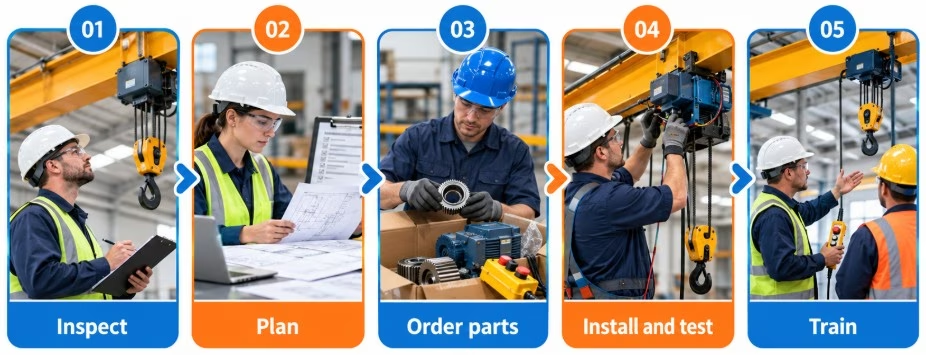
- A technician inspects the structure, controls, hoist, and safety systems.
- You get a ranked list of recommended upgrades, with costs.
- Parts are ordered and the work is scheduled around your production.
- The new components go in and the crane is tested before it returns to service.
- Operators get a walkthrough of the new features, and a maintenance plan keeps things running.
For a wider look at crane types and layouts, seeour complete guide to warehouse crane systems.
Why Choose Harris Handling?
A crane upgrade affects your safety, your schedule, and your budget, so it helps to work with a team that has seen a lot of facilities. Harris Handling has spent more than 20 yearsserving facilities across Charlotte, NC and the rest of North Carolina.
Our work spansthe industries we serve, including aerospace, automotive, and manufacturing. If you’re looking for overhead crane modernization in Charlotte, NC, we’ll walk your floor, explain your options plainly, and help you choose the plan that fits.
Frequently Asked Questions
What is overhead crane modernization?
It’s the process of upgrading an existing crane’s controls, hoists, electrical systems, and safety features so it performs and protects like a newer crane.
Is modernizing cheaper than buying a new crane?
Usually, when the structure is sound. You keep the major steel and replace only what’s outdated. An inspection will confirm whether that applies to your crane.
How long does it take?
That depends on the crane and the scope. A focused controls upgrade generally takes less time than a full modernization. You’ll get a schedule after the inspection.
Can every crane be modernized?
No. The structure, runway, and capacity have to be in good condition. If they aren’t, replacement may be the better choice.
Will it make my crane safer?
It can. Modern controls, anti-collision systems, and load monitoring all reduce risk. Regular inspections and maintenance still matter.
Still curious? Browseanswers to common material handling questions for more.
Final Thoughts
Overhead crane modernization is a practical way to improve safety, cut downtime, and get more years out of equipment you already own. If your crane is breaking down more often, costing more to maintain, or no longer fits how you work, now is a good time to look at your options.
Contact Harris Handling to schedule a consultation and get a free quote. We’ll help you decide whether to modernize, repair, or replace.